
For Leaders Committed to Measurable Value Creation Through People
The Enterprise Engagement Alliance offers complimentary Professional Management Membership to qualified corporate executives and managers in HR, sales, and marketing who wish to associate their professional brands with a commitment to measurable results and a systems-based approach to engagement across the enterprise.
The premise is straightforward. Employee engagement, customer engagement, sales engagement, channel engagement, communications, learning, incentives, recognition, and other people-focused investments should not be managed as disconnected activities. They should support the organization’s purpose, goals, objectives, and values and contribute to measurable organizational results.
EEA Professional Management Membership is designed for leaders who want to strengthen their understanding of this emerging management discipline while demonstrating a commitment to greater accountability for the impact of people-related investments.
Click here to review membership options and to join.
Complimentary for Qualified Corporate Management and Professors
There is no charge for qualified corporate executives and managers in HR, sales, and marketing, or for professors and qualified educators. Professional Management Membership is not available on a complimentary basis to suppliers, consultants, agencies, technology companies, incentive and recognition companies, or other organizations that sell products or services to corporate management.
Professional Management Member Benefits
Members receive:
- The right to identify themselves as an EEA Professional Management Member — Committed to Measurable Enterprise Engagement on LinkedIn profiles, professional biographies, and other appropriate professional communications.
- Access to EEA educational materials, research, frameworks, case studies, and practical implementation resources.
- Learning support related to stakeholder management, enterprise engagement, impact measurement, Total Quality Management principles applied to people, and related disciplines.
- Access to selected EEA assessment, measurement, and learning tools.
- Invitations to EEA educational programs, briefings, webinars, and other professional-development activities.
- Opportunities to contribute insights, experiences, research, and case studies to the EEA professional community.
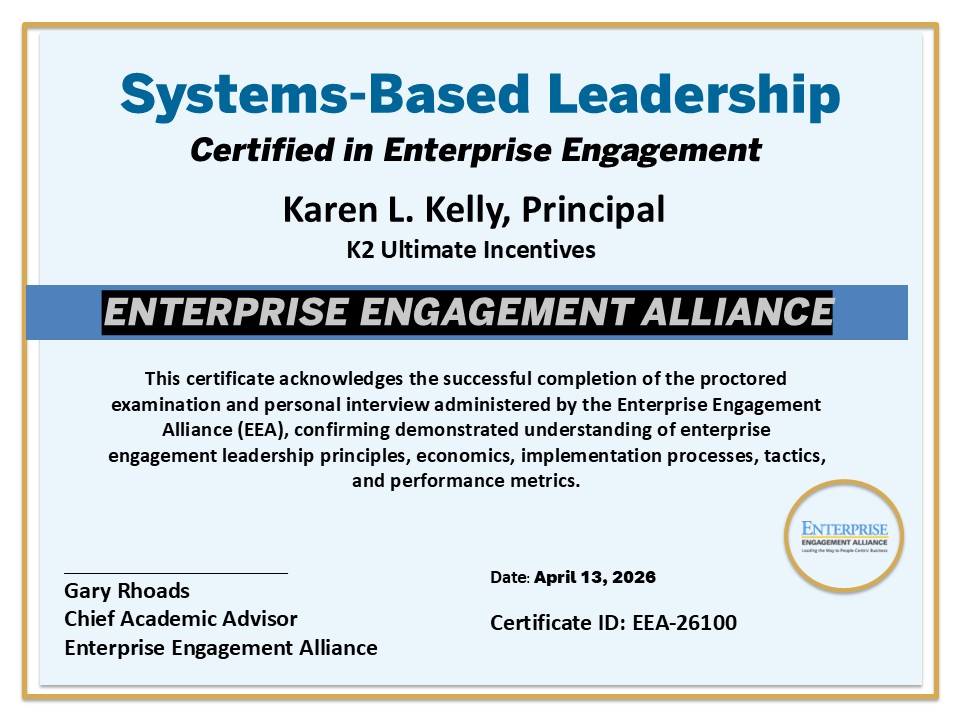
- A pathway to advanced EEA education and professional certification for managers seeking deeper expertise.
- A 25% discount on EEA Corporate Membership for organizations wishing to provide education, training, certification, and related resources to multiple managers.
The free Professional Management membership is available because of the support of a growing number of solution providers in enterprise engagement and total rewards. Click here for information about their services.
A Professional Brand Based on Accountability
Professional Management Membership gives executives and managers a way to publicly associate themselves with the principle that engagement should produce measurable value. The designation EEA Professional Management Member — Committed to Measurable Enterprise Engagement communicates that commitment without implying certification or mastery based solely on membership. Members seeking formal credentials can pursue EEA education and certification separately.
For Professors and Educators
EEA Professional Management Membership is also complimentary for professors and qualified educators interested in stakeholder management, enterprise engagement, human capital management, organizational performance, and related disciplines. Academic members receive access to EEA educational resources and frameworks and are encouraged to participate in the exchange of research, teaching practices, case studies, and emerging thinking related to measurable value creation through people.
Corporate Membership
Organizations seeking to build these capabilities across multiple functions can participate through EEA Corporate Membership. Corporate Membership is designed for companies that wish to educate multiple executives and managers, establish a common language and framework for enterprise engagement, and strengthen their ability to connect people-related investments with measurable business results. Organizations with an EEA Professional Management Member receive a 25% discount on Corporate Membership.
Supplier Participation
Solution providers participate separately through paid EEA supplier programs and education and certification programs. This includes consultants, agencies, technology companies, incentive and recognition firms, engagement solution providers, and other organizations that sell products or services to corporate management.
The distinction is intentional. Professional Management Membership exists to build a community of corporate leaders and educators committed to improving the effectiveness and measurement of stakeholder and enterprise engagement. Paid membership and certification provides the framework for solution providers that wish to develop their expertise and serve this marketplace commercially.
Building a Community Around Measurable Enterprise Engagement
The larger EEA mission is to bring together HR, sales, and marketing leaders who recognize that organizational performance increasingly depends on their ability to work across traditional functional boundaries. The common denominator is measurable value creation through people.
EEA Professional Management Membership gives leaders a way to learn about this discipline, apply it within their organizations, and associate their professional standing with a commitment to moving engagement from activities, programs, and opinions toward measurable organizational impact.
Eligibility: Complimentary membership is available to qualified corporate executives and managers in HR, sales, and marketing and to qualified professors and educators. Solution providers are not eligible for complimentary membership.
Click here for details of the EEA Impact Academy learning and certification program.
Click here for a full size PDF with links to each resource.